Tower Companies Note Slight Activity Uptick, Express Optimism
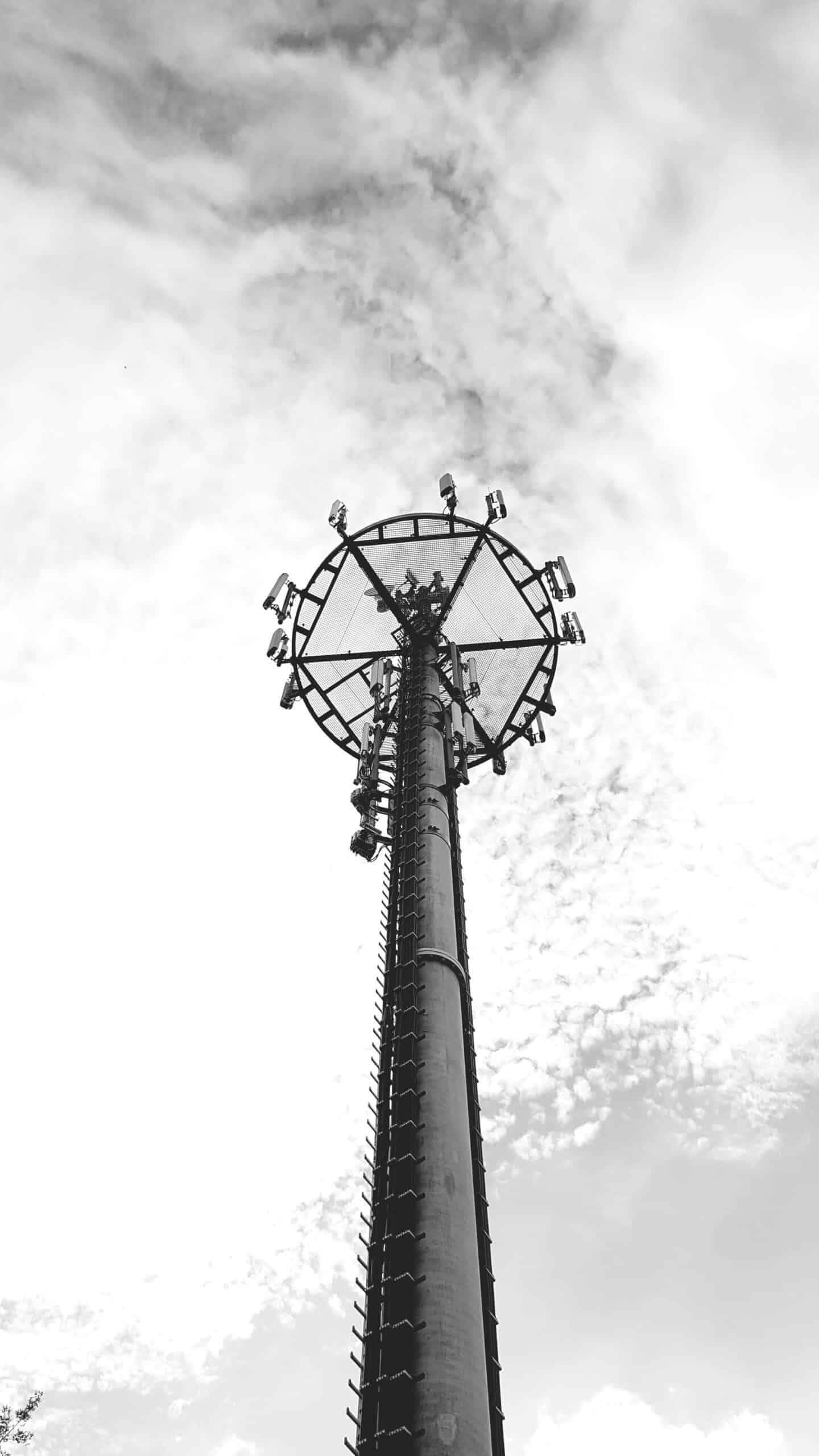
Tower companies experienced a slight uptick in activity during the second quarter, primarily driven by amendment requests rather than new co-locations. While this indicates that the carriers’ aggressive densification phase is still to come, companies remain optimistic about long-term growth prospects. Crown Castle reaffirmed its 5% organic growth target, and American Tower emphasized its focus on optimizing its tower portfolio.
Carriers Continue Growing Subscriber Bases
All major carriers reported strong subscriber growth in the second quarter, with T-Mobile reporting their highest second quarter net add in their history. Capital expenditure plans vary among carriers, with AT&T and Verizon anticipating increased spending in the second half of the year. T-Mobile expects a temporary decline in Q3 before modestly increasing in the longer term.
US Cellular – T-Mobile Deal Announced
US Cellular reported a deal, currently in regulatory review, to sell their wireless operations and some spectrum assets to T-Mobile. In the deal, US Cellular would retain ownership of their 4,400 towers and approximately 70% of their spectrum, while T-Mobile would become an anchor tenant on approximately 2,000 sites for a term of 15 years. The long-term implications for tower owners remain uncertain, as the specific sites selected by T-Mobile will not be disclosed for up to 30 months after the transaction closes. Finally, the company noted that they would continue to operate the tower portfolio but would look to monetize their retained spectrum after the T-Mobile transaction closes.
Market Watch
- Dish Network is facing a critical juncture as it navigates its $2 billion debt maturity in November. They are actively seeking solutions to meet this deadline and secure additional capital for ongoing operations.
- Comcast and Charter, cable companies operating on Verizon’s network, reported another quarter of strong subscriber growth with over 870,000 new lines added, combined. Both remain optimistic about their long-term ability to continue gaining market share due to their low wireless penetration among their existing broadband subscriber bases.
Key Takeaway for Cell Tower Owners
The industry’s resilience continues, with strong fundamentals in the sector and optimism that growth will improve after a period of moderation. However, the recent acquisition of US Cellular by T-Mobile and Dish Network’s financial status may alter the landscape for some individual tower owners.
Landlords can navigate this environment by considering their exposure. Portfolio companies with a diversified base of sites and locations are best positioned for long-term success. Conversely, landlords with a limited number of assets leased to US Cellular or Dish Network should closely monitor the market and proactively explore strategic actions.
EARNINGS CALL SUMMARIES
Crown Castle reported annual tower organic growth of 4.4% for the quarter, in line with the anticipated 4.5% organic growth forecast for 2024 but a slowdown from the 5% organic growth in 2023. Looking forward farther, they still expect tower organic growth to hit their 5% target through 2027. They noted that they have shifted their small cell operating plan to build fewer anchor nodes in the short term, and their strategic review of their fiber business is still ongoing with multiple engaged parties but declined to provide further specifics. Finally, they stated that the majority of their tower activity is coming from amendments, not colocations, and of the colocations they do see these are coming from both the major wireless carriers and regional players.
SBA reported a 2.3% net domestic organic growth rate year-over-year including a higher-than-normal 3.6% churn rate due to Sprint. Even removing for Sprint, they are currently running on the higher end of their 1-2% churn range but expect this to move lower. This Sprint churn is expected to continue through 2026, with the out-years of 2025 and 2026 seeing the greatest impacts. The company stated that they continue to see increased interest in activity from customers, but thus far this has led to only a modest increase in business executions. Additionally, they noted that they are starting to see some indications that the spread between public and private tower multiples might tighten. Finally, the company does not believe they have very material T-Mobile and US Cellular overlap exposure.
American Tower reported 5.1% domestic organic tenant billing growth year-over-year and over 5.5% when removing the impact of Sprint churn. They reiterated guidance for 2024 of 4.7% domestic organic tenant billing growth, which includes a step down in the fourth quarter due to increased Sprint churn. The company is observing a modest increase in application volumes domestically, but this still is primarily amendments and there is not yet enough colocation to point to a true densification phase from the carriers. On the status of 5G upgrades, they stated that one carrier has upgraded over 80% of their sites with mid-band 5G, one has upgraded a little over 60%, and one is “a little further behind.” Finally, the company noted they are evaluating underperforming or untenanted sites in the US and have decommissioned about 300 towers as a result.
Verizon Wireless reported total postpaid phone subscriber net gain of 148,000 for the quarter, driven by a net loss of 8,000 in the consumer segment (an improvement from prior quarters) and a net gain of 156,000 in their business segment. Capex for the first half of the year was $8.1 billion and full-year capex is still expected to be between $17 and $17.5 billion. They further reported another strong quarter of fixed wireless subscriber gains, coming in at around 380,000 adds and bringing their total fixed wireless subscriber base over 3.8 million. Finally, in broader network updates, they stated they have deployed C-Band on nearly 60% of planned sites.
AT&T reported postpaid wireless subscriber net adds of 419,000 for the quarter, which is modestly ahead of last year’s pace, as well as a quarterly churn rate of 0.70%, a further reduction from the 0.72% of the first quarter. They stated that their belief is that the next generation of wireless deployment involves more distributed radiation points rather than just macro sites. Finally, AT&T reported second quarter capex of $4.4 billion, a step up from the $3.8 billion of the first quarter and expect full year capital investment to be $21-22 billion.
T-Mobile reported postpaid wireless subscriber net adds of 777,000 for the quarter, their highest ever second quarter in company history, and have now surpassed 100 million connections. They tightened their guidance of their 2024 full-year capex to come in at $8.7-9.1 billion, with the third quarter expected to be a low water mark for capex and longer-term expectations to be $9-10 billion in annual capex. Finally, after announcing two fiber related transactions in the first half of the year, they stated their appetite for additional fiber transactions is limited.
Dish reported that, excluding the impacts of the ACP, they added 32,000 wireless subscribers in the quarter. Their second quarter wireless capex was $237 million, and their full year 2024 capex is expected to be half of 2023 levels before picking back up in 2025 to meet additional build deadlines. Their network now covers 200 million people with 5G voice and 250 million with 5G mobile broadband. They are on track to meet their June 2025 FCC build deadline for some of their spectrum licenses but will require additional capital for the other licenses, noting that these licenses are primarily concentrated in areas of lower population density. The company currently only has cash on hand to fund operations through November when they have approximately $2 billion of debt maturing, but they are actively working on solutions to meet this obligation. They stated they are not interested in selling their spectrum outright but are evaluating opportunities to borrow using this spectrum as collateral.
US Cellular reported a deal, currently in regulatory review, to sell their wireless operations and some spectrum assets to T-Mobile. In the deal, US Cellular would retain ownership of their 4,400 towers and approximately 70% of their spectrum, while T-Mobile would be an anchor tenant on approximately 2,000 of these towers for a term of 15 years – however it will not be known which sites T-Mobile is taking until up to 30 months after the transaction closes. Finally, the company noted that they would continue to operate the tower portfolio but would look to monetize their retained spectrum after the T-Mobile transaction closes.
Comcast and Charter reported that they added 322,000 and 557,000 wireless subscribers, respectively, in the quarter. For both companies, this is a sequential increase in the number of new subscriber additions and they both still see a long runway of subscriber additions as their mobile penetration among their existing broadband customers remains low. Additionally, Charter reported proceeds of $400 million from the sale of their tower portfolio.