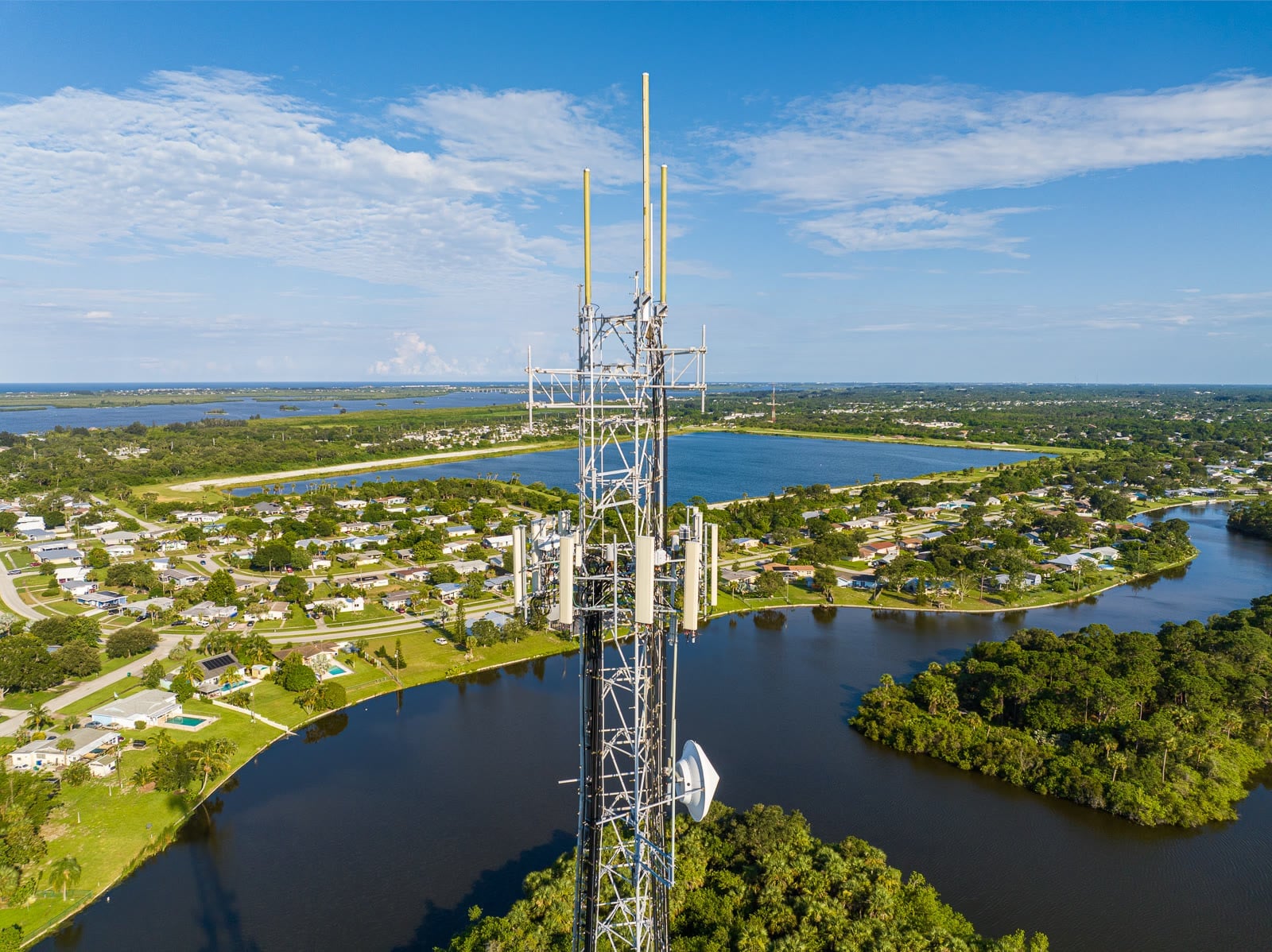
Direct-to-device satellite deployment is generating real value in the wireless infrastructure market. But that value likely flows to portfolio operators — not individual site owners. Understanding why is the first step to making a smarter decision about your lease.
KEY TAKEAWAYS
|
There’s a lot of noise in the wireless industry right now about satellite infrastructure. AT&T is preparing to launch a beta direct-to-device (D2D) satellite service in the first half of 2026 through its partnership with AST SpaceMobile. T-Mobile has been offering Starlink-powered D2D messaging since July 2025. Verizon signed a commercial agreement with AST SpaceMobile to launch its own D2D services this year.
If you own property with a cell site lease, the satellite headlines probably raise more questions than they answer. Will D2D make ground-based infrastructure less relevant — or more? The answer depends on your site’s market, its position in the wireless ecosystem, and who’s managing the site. Not every site will be affected the same way. Urban and suburban sites in capacity markets are likely to see increased infrastructure activity. Rural and exurban sites face a more uncertain picture. And across all categories, portfolio operators are better positioned to capture the upside than individual owners acting alone. Here’s why.
What’s Actually Being Built
D2D satellite service requires significant ground infrastructure — purpose-built gateway stations that connect orbiting satellites to terrestrial carrier networks. AT&T recently activated its fourth ground gateway to support the AST SpaceMobile constellation. As the satellite fleet scales toward 45 to 60 satellites by the end of 2026, the demand for supporting wireless infrastructure will grow alongside it. More satellites mean more ground stations, more backhaul capacity, more carrier equipment on existing sites, and more amendment activity across the wireless landscape.
For cell site owners, the natural question is whether this activity translates into more value for your lease. The short answer: it might — but not in the way most people assume, and it’s less likely for individual owners acting on their own.
Why This Type of Value Typically Reaches Individual Site Owners Less Often — and Last
Satellite infrastructure deployment, and the downstream carrier activity it generates, is an institutional play. It requires scale, speed, and established carrier relationships that individual property owners don’t have. When carriers need to upgrade equipment, negotiate new amendments, or deploy infrastructure to support D2D services, they go to portfolio companies — operators who manage hundreds or thousands of sites and can execute across dozens of properties simultaneously. They don’t cold-call individual rooftop owners.
This is a many-to-many dynamic. Portfolio operators maintain ongoing relationships with every major carrier across their entire footprint. When AT&T or Verizon needs to move fast on infrastructure in capacity markets — whether that’s equipment upgrades, new amendments, or supporting satellite service expansion — they go to the operator who already has scale in the target footprint, the asset management capability and the motivation to get it done. An individual owner with one or two sites offers little efficiency and, as a result, is often the provider of last resort.
Who’s Best Positioned to Capture This Network Enhancement Value, and Why That Matters to You
Portfolio companies with active asset management programs and long-term business plans are positioned to capture the value that satellite expansion and carrier infrastructure activity create. They have business development teams that negotiate terms that reflect real market value, the technical knowledge and asset management teams that work with carriers to get new equipment deployed, and the scale that makes carriers want to work with them.
This is why portfolio operators are interested in these technologies and why that interest translates into competitive acquisition pricing. When a portfolio company evaluates your lease, they’re not just looking at your current rent roll. They’re looking at what they can do with the site that you cannot: activate carrier relationships, pursue new tenancy, and position the site within a network that carriers want to engage with. The value isn’t necessarily created by your property being unique. It’s created by the capabilities a portfolio operator brings to the table.
What This Means for Your Strategy
If satellite and D2D creates value that portfolio operators are best positioned to capture, then the strategic question isn’t “how do I capitalize on this trend?” It’s “what does this trend tell me about the gap between what my lease earns and what a portfolio operator could do with it?”
That gap — the Portfolio Effect — has always existed. But emerging technologies like D2D widen it. Every new deployment opportunity that requires scale, carrier relationships, and proactive asset management is another opportunity that flows to portfolio operators and bypasses individual owners. If you’re holding a cell site lease and waiting for new technology to make it more valuable, you may be waiting for something that will never arrive at your door. The value is real; it’s just not accessible from where you’re sitting.
The Partnership Proposition
When you sell your cell site lease to a portfolio operator, you convert a passive income with limited upside into immediate liquidity — while the portfolio operator applies the capabilities needed to pursue value you might struggle to access on your own. You generate immediate capital and eliminate the ongoing complexity of carrier management, amendment negotiations, and long-term liability. The portfolio operator gains a site they can integrate into an active asset management program and position within a broader network that makes institutional deployment possible.
It’s not about urgency. It’s about understanding the mechanics of how value flows in this industry and making an informed decision about whether your lease is working as hard as it could be.
What Should Cell Site Owners Do Next?
Whether or not you’re considering a transaction, the first step is understanding what your lease is actually worth in today’s market — and what the gap looks like between holding and partnering with the right portfolio operator.
TowerPoint works with property owners across the country to provide that clarity. As one of the nation’s leading acquirers and asset managers of wireless real estate, with over 1,200 managed sites across 48 states, TowerPoint brings the carrier relationships, asset management expertise, and portfolio-level capabilities that make emerging infrastructure value accessible.
Understanding the mechanics now puts you in control — whether you choose to partner, hold, or simply make a better-informed decision about your site.
| Want to understand the gap between your lease’s current value and its portfolio value?
Contact our team to discuss your site and the market dynamics shaping wireless real estate. |
Frequently Asked Questions
What is a satellite gateway and how does it relate to cell sites?
A satellite gateway is a purpose-built ground station that connects orbiting satellites to terrestrial carrier networks. These are specialized facilities with large satellite dishes, 360-degree sky visibility, and direct fiber backhaul connections — distinct from typical cell tower or rooftop sites. However, the expansion of satellite service drives broader carrier infrastructure activity, including equipment upgrades and new amendments on existing wireless sites, which portfolio operators are positioned to pursue.
Will AT&T’s satellite service make my cell site lease more or less valuable?
Not directly for individual site owners and this is highly dependent on location (e.g. Urban, Suburban, Rural) with Satellite technology potentially displacing growth in less densely populated areas Satellite expansion drives carrier infrastructure activity — equipment upgrades, new amendments, densification — but that activity will favor portfolio operators who have the carrier relationships, business development resources, and scale to facilitate efficient deployment. Individual site owners are far less likely to see direct benefits from satellite trends on their own, and even when carriers do initiate amendments, the terms offered to a single-site owner will differ significantly from what a portfolio operator can negotiate.
Why do carriers work with portfolio companies instead of individual site owners for new deployments?
Carriers need speed, reliability, and scale when deploying and upgrading infrastructure. Portfolio companies offer a single point of contact across hundreds of sites, established relationships and contract frameworks, and professional asset management that reduces friction. For a carrier expanding its network to support satellite services on a tight timeline, engaging one portfolio operator is far more efficient than negotiating with dozens of individual landlords.
What is the Portfolio Effect?
The Portfolio Effect describes how the same cell site lease generates different outcomes depending on whether it is held by an individual owner or managed within a large portfolio. Portfolio operators have negotiating leverage, market intelligence, technical expertise, and business development capabilities that allow them to capture value — such as new tenancy and amendments driven by emerging technologies — that individual owners cannot access on their own. The gap between standalone lease value and portfolio value is structural, and it widens during periods of infrastructure expansion.
Should I sell my cell tower lease?
That depends on your financial goals and capital strategy. The purpose of understanding the Portfolio Effect is to shed light on the purpose companies like TowerPoint serve in the industry and illustrate the market forces that impact the value of individual cell site leases. Many site owners discover that the value they assumed their lease would generate from industry trends like satellite deployment is actually inaccessible without portfolio-level capabilities. Having that clarity puts you in a stronger position regardless of what you decide.
Who is TowerPoint?
TowerPoint is the nation’s #1 private acquirer of wireless real estate and a leader in institutional asset management, with over 1,200 managed sites across 48 states. Built on a foundation in commercial real estate, TowerPoint brings a property owner’s perspective to every transaction — acquiring cell site leases and managing them long-term through active carrier relations, lease administration, and new tenancy pursuit, while the property owner retains full ownership of the underlying real estate.